 What Is a Flower Frog?
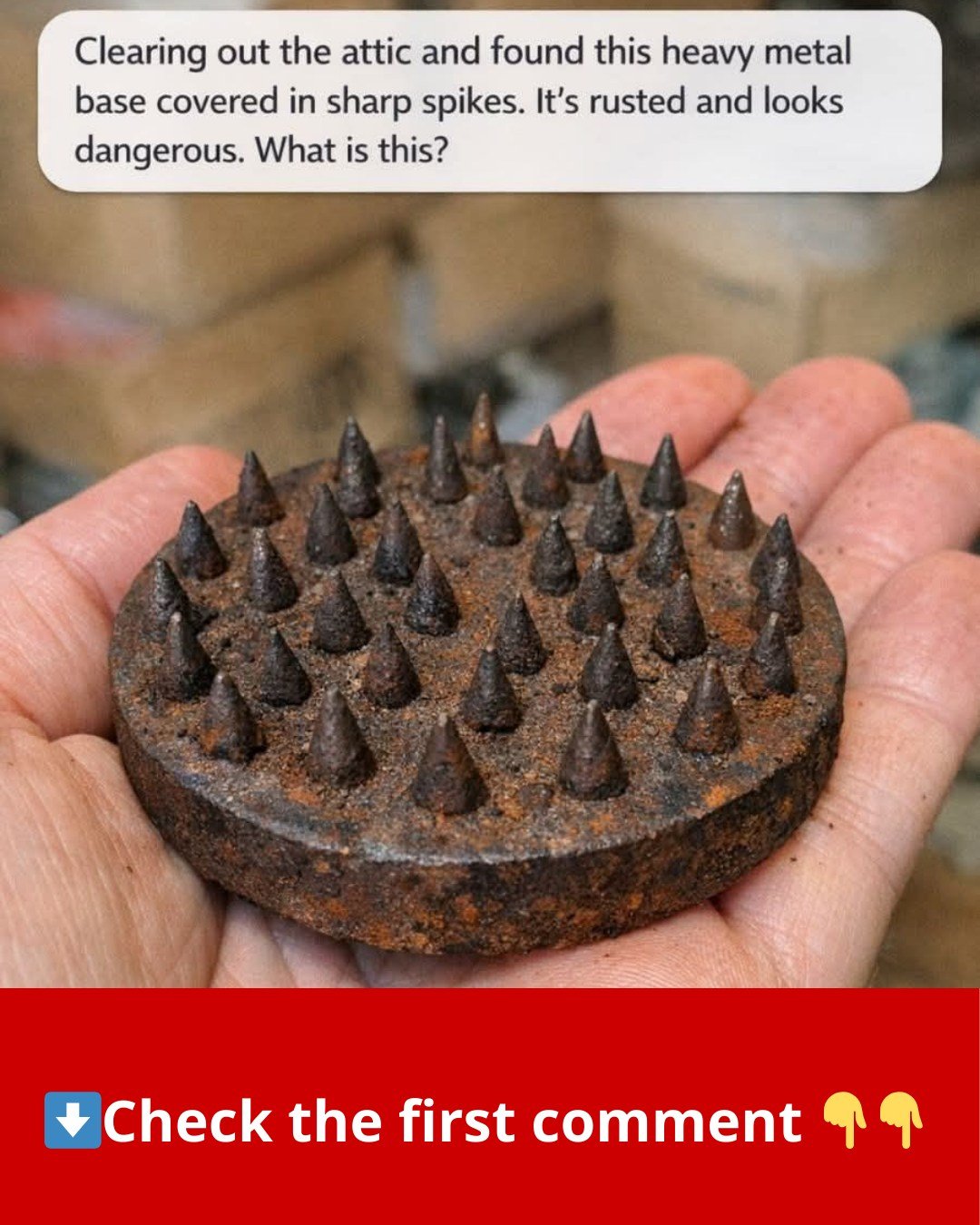
Despite its formidable appearance, this tool served beauty, not battle. A flower frog is a weighted base—traditionally cast iron, lead, or brass—studded with upright pins designed to secure flower stems within vases. Popular from the Victorian era through the 1950s, it was the florist’s secret weapon before floral foam existed.
How it worked:
The frog settled in the bottom of a vase or shallow bowl.
Stems were pressed between pins, locking blooms in precise arrangements.
Water filled the vessel, nourishing flowers while the frog held stems upright for days.
The result? Structurally perfect bouquets—no wilting, no slumping, no rearranging. Just enduring elegance.
 Confirming the Identification
Your object is likely a flower frog if it shows these traits:
✓ Uniform pin pattern – Spikes arranged in concentric circles or grids (not random)
✓ Weighted, flat base – Heavy enough to anchor arrangements (2–6 inch diameter typical)
✓ No threading or mechanical parts – Purely functional design, not an industrial component
✓ Possible markings – Faint stamps like “England,” “Japan,” or manufacturer names (e.g., “Summit”)
Less likely alternatives:
• Weaponry – Lacks handles, blades, or intentional harm design
• Industrial part – No bolt holes, gears, or attachment points
• Decorative object – Too utilitarian; lacks ornamental flourishes
 A Glimpse Into Floral History
Flower frogs thrived in an era when arranging was an art form. Before mass-produced foam, florists relied on these metal guardians to create:
→ Formal centerpieces for weddings and banquets
→ Ikebana-inspired compositions (Japanese frogs often featured minimalist pin patterns)
→ Church altar arrangements that needed to last through long services
Don’t Miss The Rest! Press Next Button Below To Continue Reading 🔜🔜
Don’t Miss The Rest! Press Next Button Below To Continue Reading.