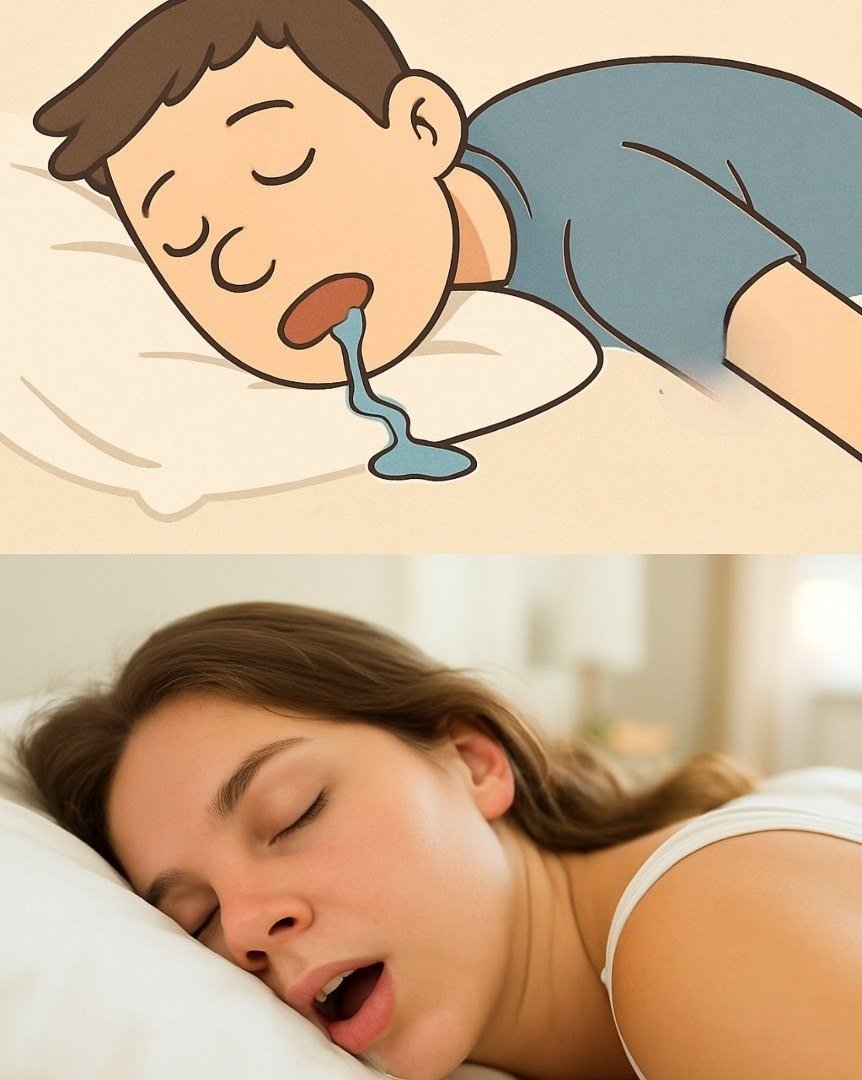
3. Gastroesophageal Reflux Disease (GERD)
Why: Stomach acid traveling up the esophagus can trigger a reflex increase in saliva production as the body tries to neutralize the acid.
Signs: Heartburn, acid taste in the mouth, nighttime coughing, chest discomfort.
4. Neurological Disorders (Parkinson’s Disease, MS, ALS)
Why: These conditions can affect the nerves and muscles responsible for swallowing (dysphagia), causing saliva to pool and leak during sleep.
Signs: Tremors, stiffness, balance issues, changes in speech or coordination, progressive weakness.
5. Sleep Apnea or Obstructive Breathing Issues
Why: Breathing through the mouth during sleep—common in sleep apnea—can cause drooling. It’s often a sign of obstructed nasal or throat airways.
Signs: Loud snoring, gasping for air at night, daytime fatigue, morning headaches.
6. Cardiovascular or Neurological Events (Stroke, TIA)
Why: A blockage or bleed in the brain can disrupt muscle control, including swallowing and facial muscles. This can lead to one-sided drooling during sleep.
Signs: Sudden facial drooping, arm weakness, speech difficulty, confusion, dizziness. This is a medical emergency
The Stroke Connection: A Critical Warning Sign
The case shared in the original text is a real red flag. When drooling is consistently on one side and accompanied by other subtle signs (like slightly slurred speech, mild facial asymmetry, or unexplained fatigue), it can indicate transient ischemic attacks (TIAs) or early cerebrovascular blockage. Early detection can prevent a major stroke.
Key takeaway: One-sided drooling + new sleep changes = time to see a doctor promptly.
 How to Reduce Sleep Drooling (When It’s Not Serious)
If your doctor rules out medical causes, try these lifestyle adjustments:
Tip How It Helps
Sleep on your back Prevents gravity from pulling saliva out of your mouth.
Use a supportive pillow Keeps your head and neck aligned, helping keep your mouth closed.
Practice nasal breathing If allergies or congestion force mouth breathing, try saline sprays, strips, or allergy treatment.
Maintain oral hygiene Brush, floss, and see your dentist regularly to prevent infections that increase saliva.
Stay hydrated Oddly, dehydration can thicken saliva, making it harder to swallow smoothly.
Consider myofunctional therapy Exercises to strengthen tongue, lip, and throat muscles can improve swallow control.
Continued on the next page
Don’t Miss The Rest! Press Next Button Below To Continue Reading.